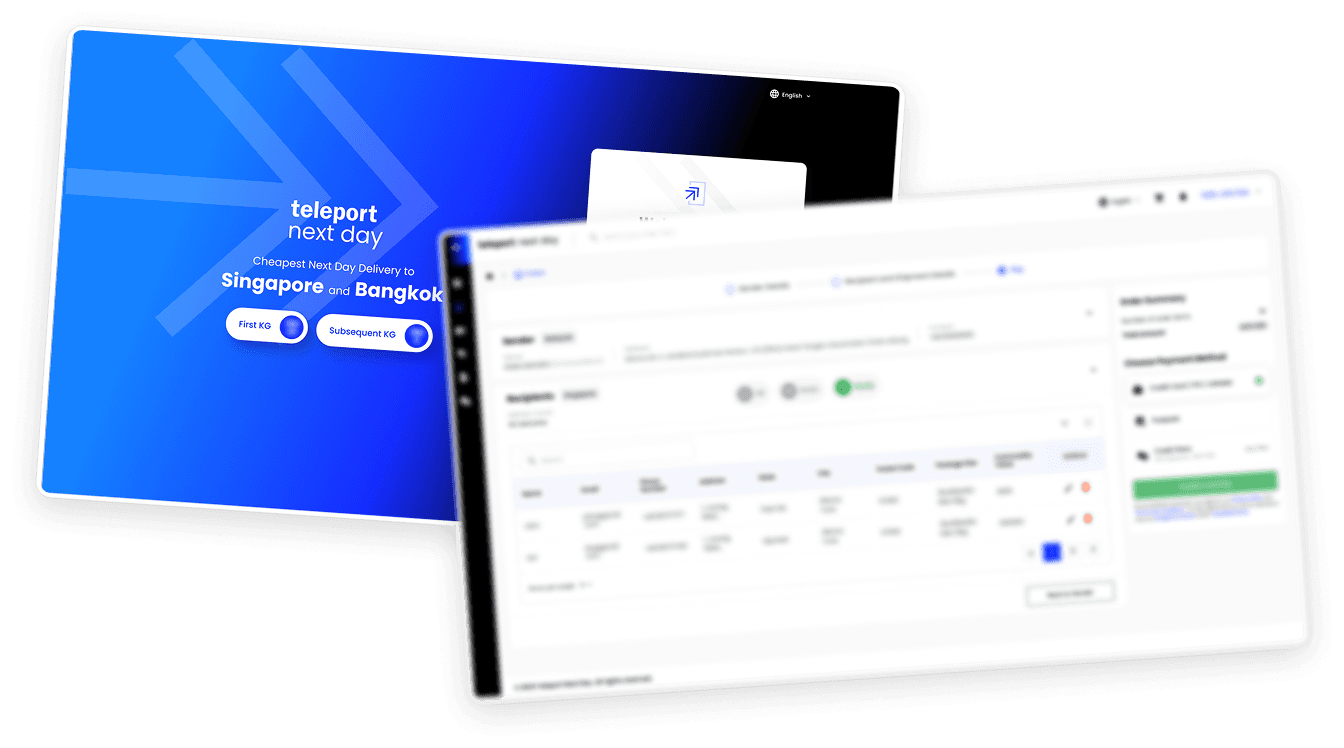
Teleport Next Day
Teleport Next Day
Overview
Building B2C & B2B system, offering affordable, next-day delivery for all in Southeast Asia
I had the incredible opportunity to shape the user experience for Teleport, an innovative system(Teleport Next Day) offering affordable, next-day delivery for all in Southeast Asia. Join me as I take you through my journey—tackling challenges, refining user interactions, and gaining valuable insights while leading various logistics and delivery projects
Building B2C & B2B system, offering affordable, next-day delivery for all in Southeast Asia
I had the incredible opportunity to shape the user experience for Teleport, an innovative system(Teleport Next Day) offering affordable, next-day delivery for all in Southeast Asia. Join me as I take you through my journey—tackling challenges, refining user interactions, and gaining valuable insights while leading various logistics and delivery projects
Categories
B2C | B2B | Figma
Web Application
Date
Feb 10, 2024
Client
Teleport
Problem Statement
Problem Statement
In Southeast Asia, businesses and consumers face challenges with high delivery costs, long shipping times, and inefficient logistics networks. Traditional delivery solutions often fail to provide a cost-effective and reliable options in the markets. To address this, our new system offers affordable, next-day delivery, ensuring faster, more accessible, and seamless logistics across the region.
Team
Team
I led a team of designers, collaborating across different cross-functional teams consisting of Product Managers, Engineers, QAs, and Operations. Each team focused on key aspects of our B2B, B2C systems.
Process
Process
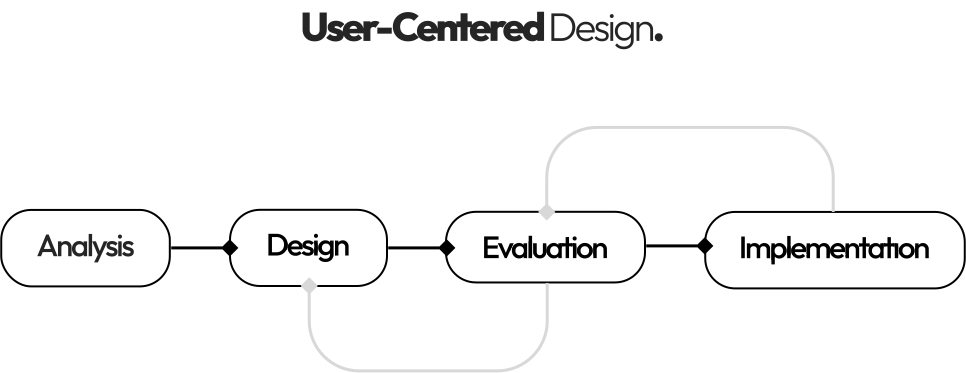
The first step in designing an effective solution is to thoroughly understand the problem at hand. Despite a tight delivery timeline, we prioritized user research over assumptions, ensuring that our design decisions were based on real insights rather than guesswork. After all, how often do you engage with users before making critical design choices?
We are dealing with a big challenge – Implementation of a new system for next-day delivery. This was a complex undertaking, requiring us to create a solution that was not only efficient and scalable but also made a significant impact on user behavior—both internally for operational teams and externally for end users. To drive adoption and minimize resistance, we focused on incorporating familiar design patterns that users could easily recognize and interact with.
To gain a deeper understanding of user needs and pain points, I conducted interviews and discussions with key stakeholders. Beyond end users, it was equally important to align with business owners and decision-makers, ensuring that the system balanced user expectations with strategic business objectives. By integrating these diverse perspectives, I was able to craft a holistic, intuitive, and seamless user experience.
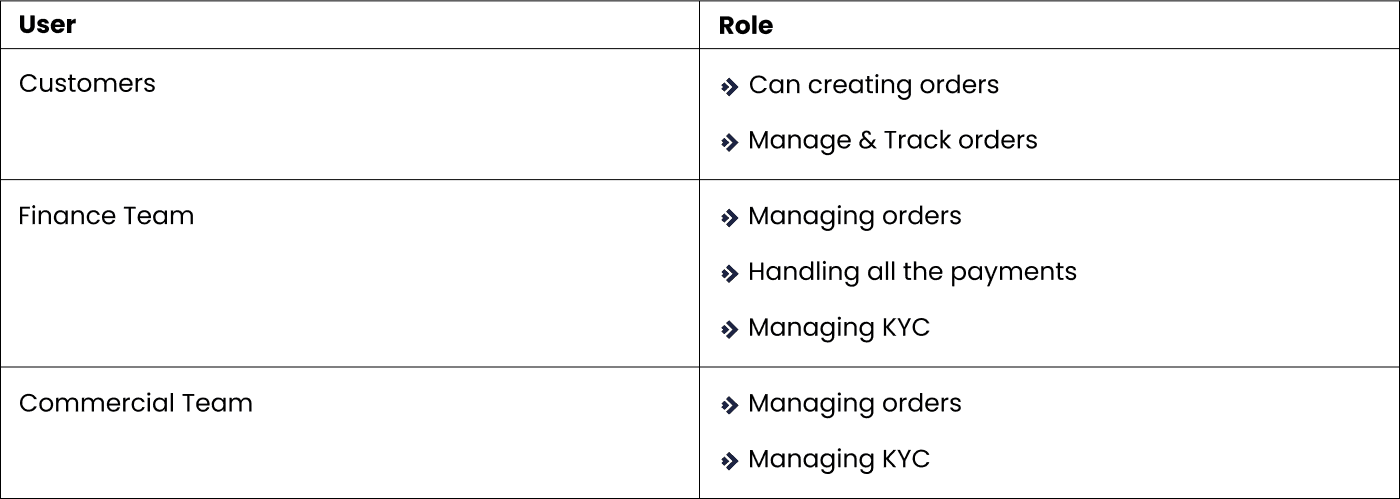
With these insights in place, the next step was to define our target users and shape a design strategy that met their needs effectively.
Design System
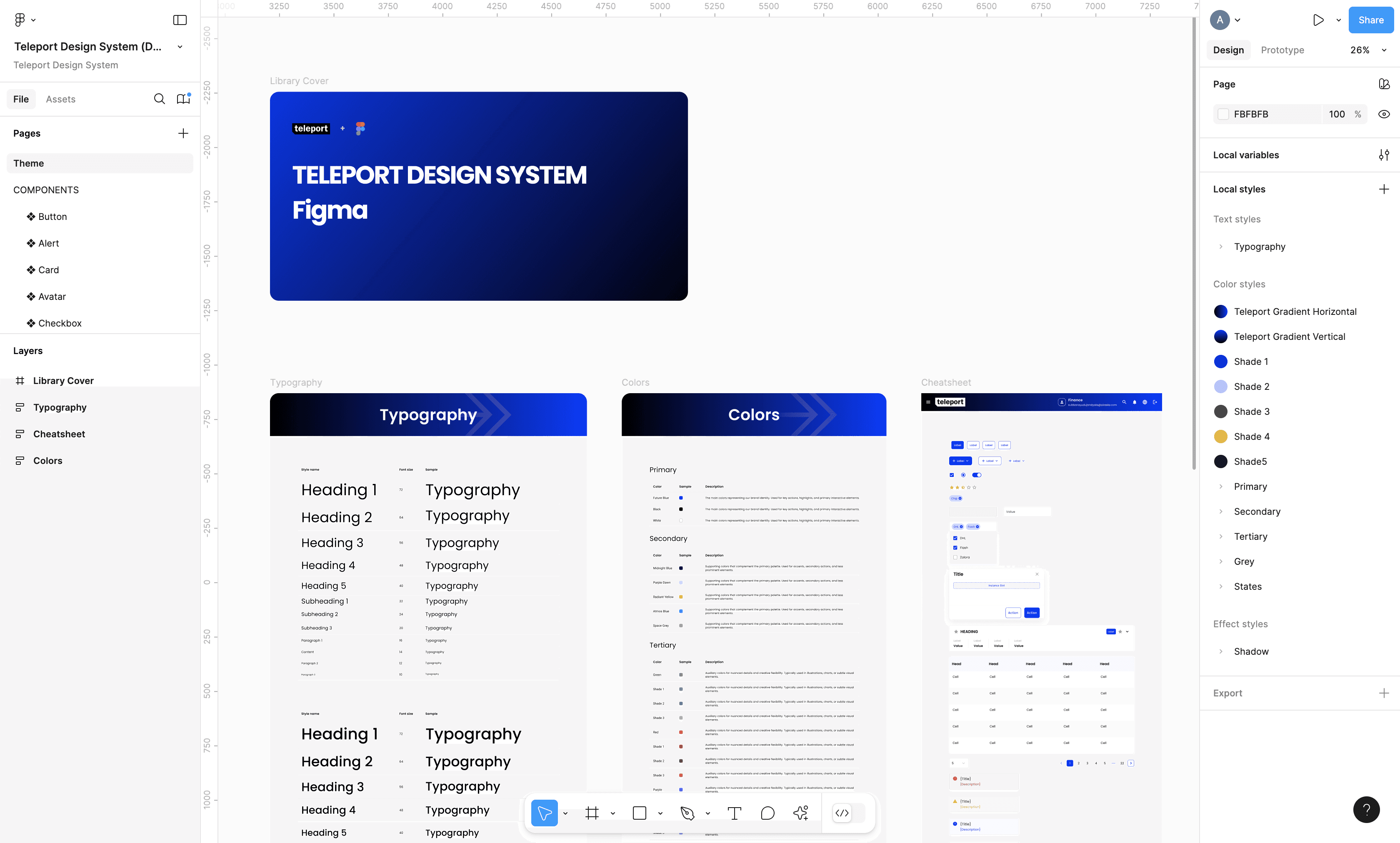
Design System
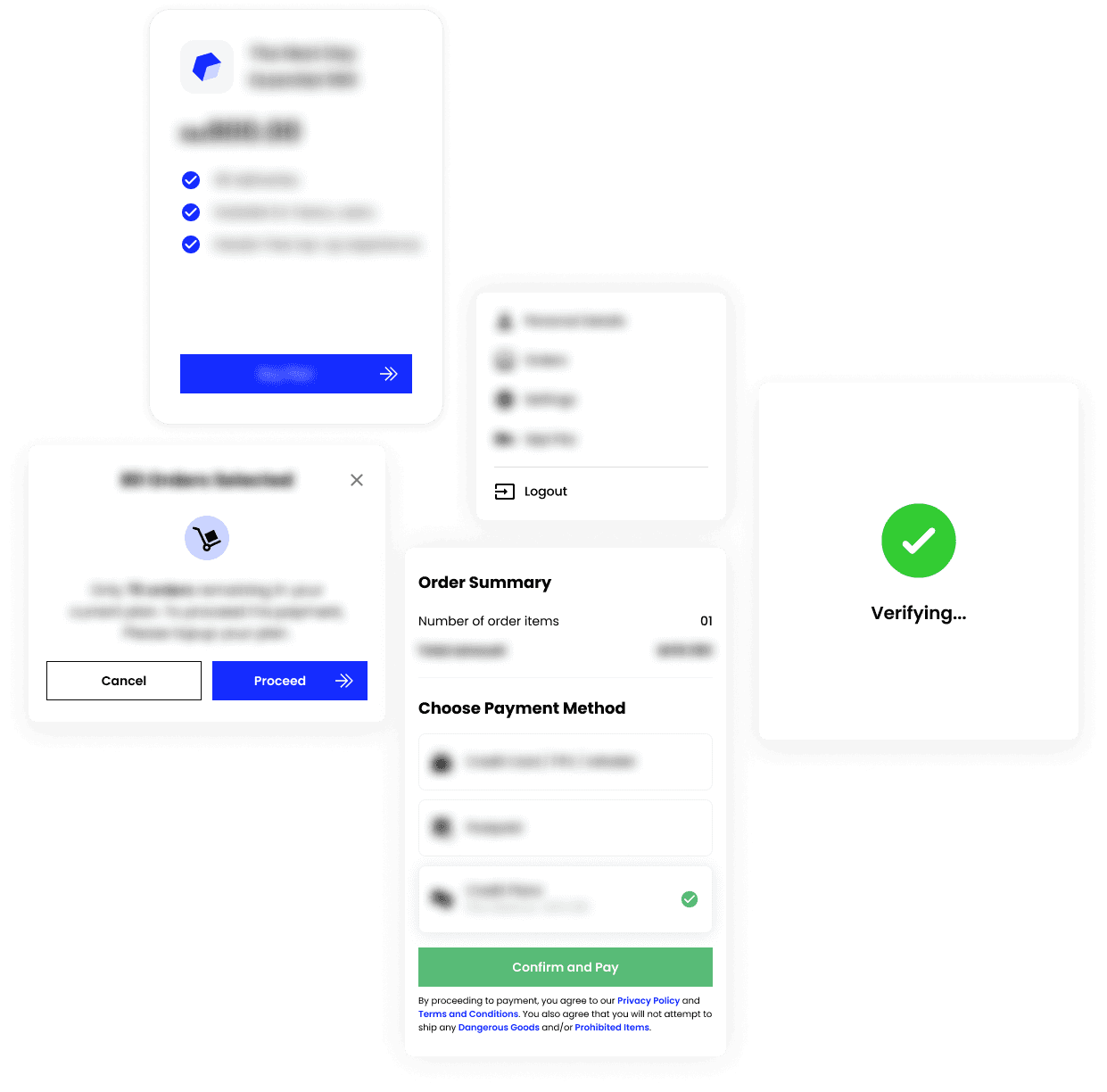
Developed this Design System to update Teleport’s design and make all our products visually unique and cohesive. By establishing a unified set of UI components, design patterns, and guidelines, we ensure consistency, scalability, and a seamless user experience. This system modernizes our design approach, strengthens our brand identity, and supports future innovation across all Teleport products.
Market Research & Competitive Analysis
Market Research & Competitive Analysis
Our goal was to find a system that enables users to order and track deliveries seamlessly. To achieve this, we conducted a thorough competitor analysis, studying existing solutions in the market. Rather than judging their design choices, we focused on understanding their strengths, weaknesses, and usability patterns.
User Interviews
User Interviews
Once we have some rough ideas of what we are trying to solve, we came up with a set of questions to validate our assumptions. We made sure that user interviews are conducted strategically to make sure that the respondent are comfortable and willing to open up to share hard truths.
Prototype-Driven Iterative Design
Prototype-Driven Iterative Design
We actively engage in brainstorming and sketching to explore various design ideas. Each week, we share our progress with stakeholders to gather feedback and refine our approach. Additionally, we go through multiple design stages, including wireframing, UI design, and prototyping, ensuring a structured and iterative process.
Once we are confident in the design, we test it using Figma with internal and external users using Maze. During testing, we assign users specific tasks and carefully observe their interactions. We only intervene if they encounter difficulties, asking targeted questions to gain deeper insights into their challenges and refine the user experience accordingly.
Learning
Learning
Developing such a system from scratch is a challenging endeavor that demands insights from industry experts. For a solution that supports an active business, reliability and fulfilling the main Jobs-to-be-Done are critical priorities. Additionally, clear communication with stakeholders from the start is essential to effectively manage expectations, as building a high-quality product requires time and effort.
I didn’t achieve this alone—I’m truly grateful to have an exceptional design team who handled much of the heavy lifting, translating ideas into impactful screens. Thank you, team, for your hard work and dedication!
Disclaimer: The projects shared are based on my personal experience and may have undergone changes since then.


Send an email, and I’ll take care of the rest
© 2026. All right reserved
Created by Abin Bernard
Send an email, and I’ll take care of the rest
© 2026. All right reserved
Created by Abin Bernard
Send an email, and I’ll take care of the rest
© 2026. All right reserved
Created by Abin Bernard