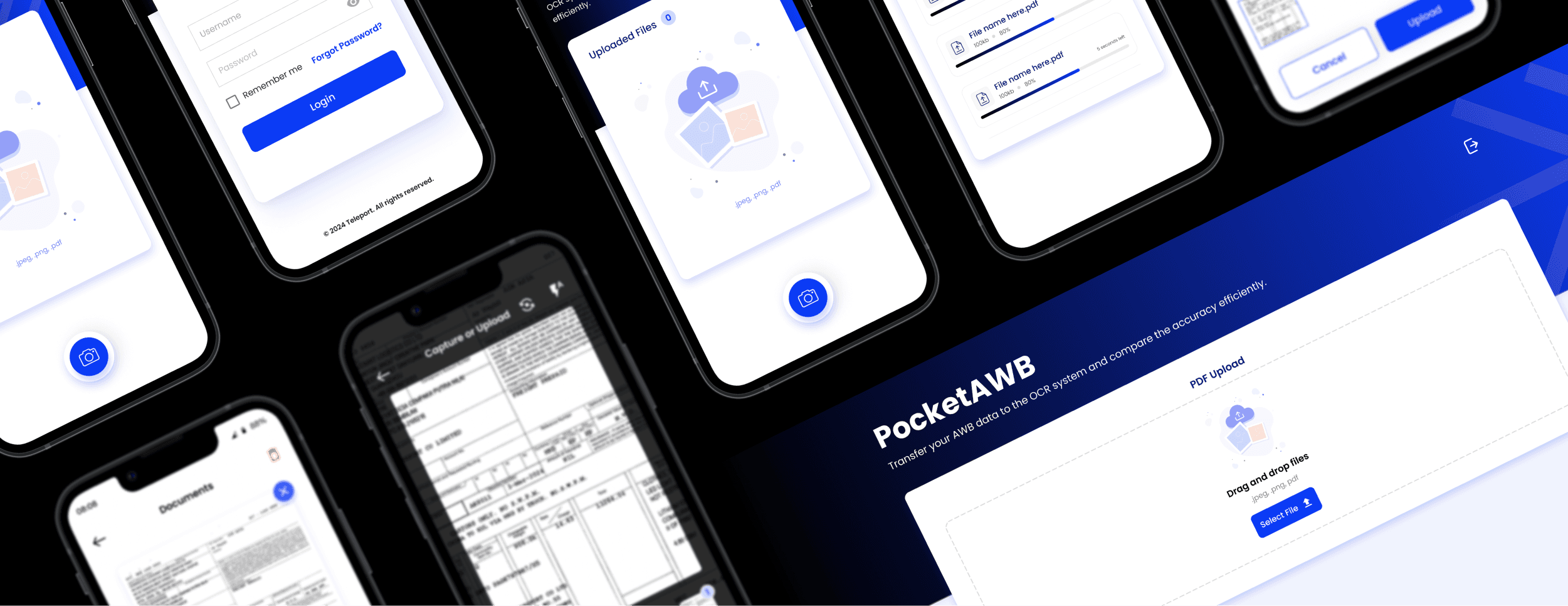
Pocket OCR
Pocket OCR
Overview
Digitalizing an Air Waybill (AWB)
I had the incredible opportunity to shape the user experience for Teleport, an innovative feature converting the traditionally paper-based AWB document into an electronic or digital format. This process enhances efficiency, improves accuracy, and enables better tracking and management of shipments.. Join me as I take you through my journey—tackling challenges, refining user interactions, and gaining valuable insights while leading various logistics and delivery projects
Digitalizing an Air Waybill (AWB)
I had the incredible opportunity to shape the user experience for Teleport, an innovative feature converting the traditionally paper-based AWB document into an electronic or digital format. This process enhances efficiency, improves accuracy, and enables better tracking and management of shipments.. Join me as I take you through my journey—tackling challenges, refining user interactions, and gaining valuable insights while leading various logistics and delivery projects
Categories
B2B | Figma
Mobile & Web App
Date
Mar 21, 2025
Client
Teleport
Problem Statement
Problem Statement
The inaccuracy of chargeable weight between two systems is directly impacting revenue data. Discrepancies in chargeable weight within our system result in unbilled excess weight, leading to financial losses. This issue arises due to manual data entry errors, inconsistent document formats, and reliance on paper-based Air Waybills (AWBs).
Proposed Solution
Proposed Solution
To address this challenge, we propose an automated solution leveraging OCR, Document AI, and Gemini AI to detect and resolve chargeable weight discrepancies effectively.
1. Digitalizing AWBs with OCR
Implement an OCR system to automatically capture and extract information from all AWBs, eliminating manual data entry errors.
Convert handwritten and printed AWBs into structured digital data for seamless processing.
Ensure high accuracy by using advanced image processing techniques to handle different formats, fonts, and handwritten elements.
2. Intelligent Discrepancy Detection Using Document AI
Once AWB data is captured, Document AI will analyze and compare extracted chargeable weight details against the system’s recorded weight.
Identify mismatches between the actual chargeable weight and what is billed.
Automate flagging of discrepancies to ensure no excess weight goes unbilled.
3. Automated Alert System & Revenue Recovery
Whenever a discrepancy is detected, automated alerts will be generated for the operations and finance teams to take immediate corrective action.
The system can also automatically update chargeable weight records to reflect the correct weight, ensuring accurate billing and preventing revenue leakage.
1. Digitalizing AWBs with OCR
Implement an OCR system to automatically capture and extract information from all AWBs, eliminating manual data entry errors.
Convert handwritten and printed AWBs into structured digital data for seamless processing.
Ensure high accuracy by using advanced image processing techniques to handle different formats, fonts, and handwritten elements.
2. Intelligent Discrepancy Detection Using Document AI
Once AWB data is captured, Document AI will analyze and compare extracted chargeable weight details against the system’s recorded weight.
Identify mismatches between the actual chargeable weight and what is billed.
Automate flagging of discrepancies to ensure no excess weight goes unbilled.
3. Automated Alert System & Revenue Recovery
Whenever a discrepancy is detected, automated alerts will be generated for the operations and finance teams to take immediate corrective action.
The system can also automatically update chargeable weight records to reflect the correct weight, ensuring accurate billing and preventing revenue leakage.
Process
Process
The first step in crafting an effective solution is gaining a deep understanding of the problem. Despite a tight delivery timeline, we prioritized user research over assumptions, ensuring our design decisions were driven by real insights rather than guesswork
We are dealing with a big challenge – Implementation of a new system for converting the traditionally paper-based AWB document into an electronic or digital format. This was a complex undertaking, requiring us to create a solution that was not only efficient and scalable but also made a significant impact on user behavior—both internally for operational teams. To drive adoption and minimize resistance.
To gain a deeper understanding of user needs and pain points, I conducted interviews and discussions with key stakeholders. Beyond end users, it was equally important to align with business owners and decision-makers, ensuring that the system balanced user expectations with strategic business objectives. By integrating these diverse perspectives, I was able to craft a holistic, intuitive, and seamless user experience.
With these insights in place, the next step was to define our target users and shape a design strategy that met their needs effectively.
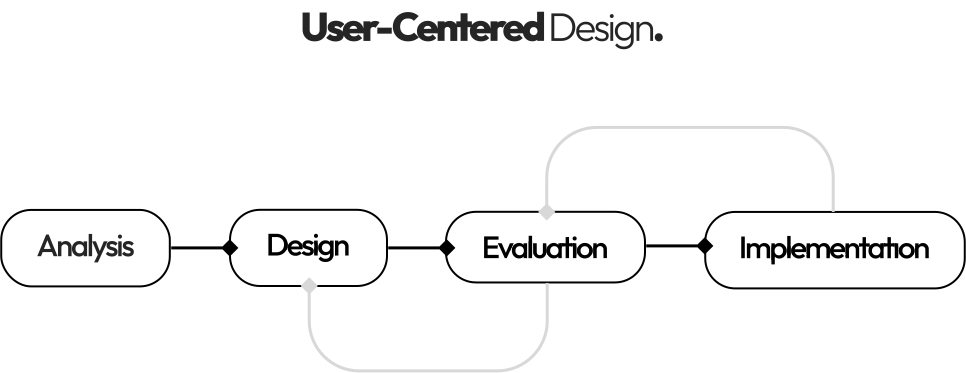
User Research
User Research
To achieve the solution, we conducted a thorough competitor analysis, studying existing solutions in the market. Rather than judging their design choices, we focused on understanding their strengths, weaknesses, and usability patterns.
User Interviews
Once we have some rough ideas of what we are trying to solve, we came up with a set of questions to validate our assumptions. We made sure that user interviews are conducted strategically to make sure that the respondent are comfortable and willing to open up to share hard truths.

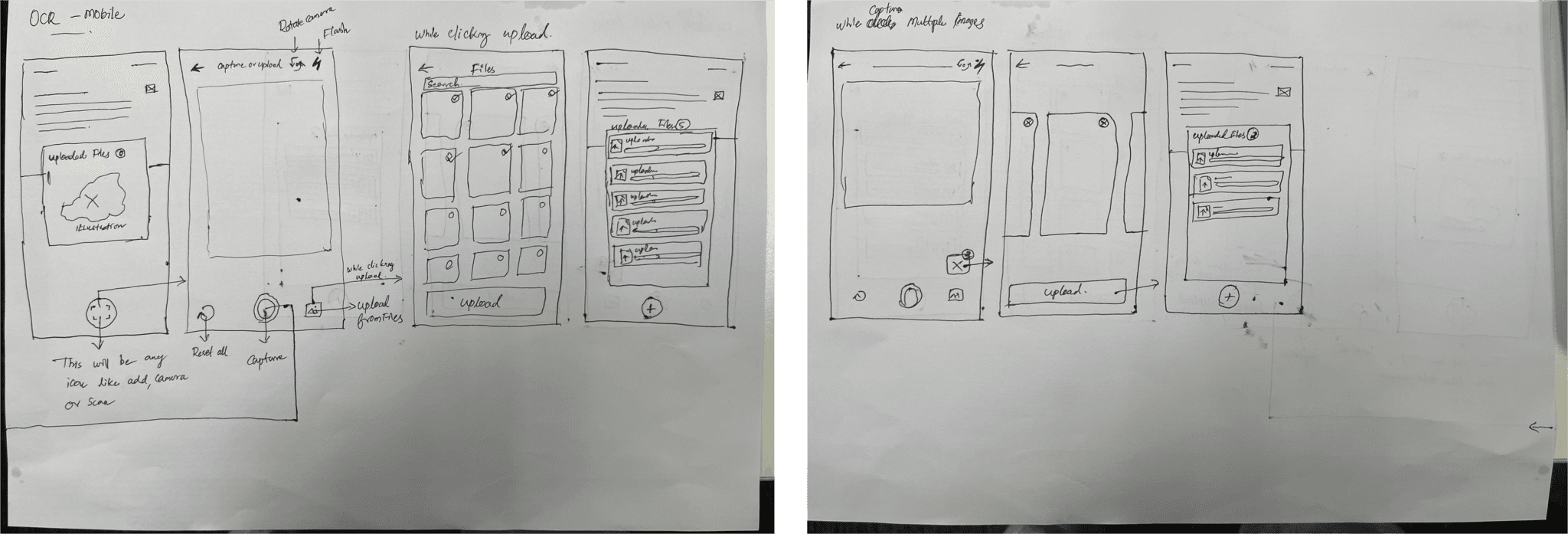
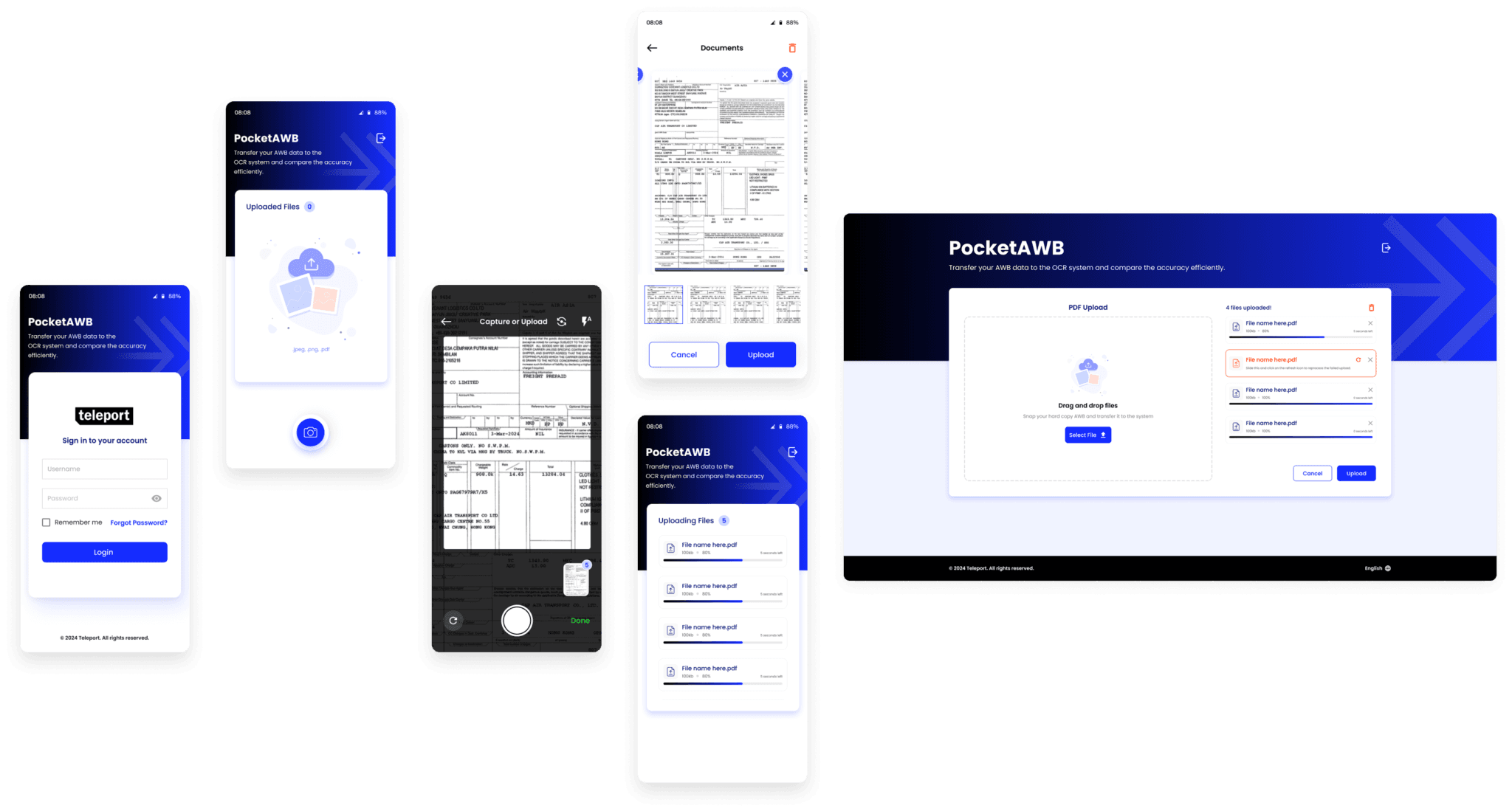
Low & High fidelity > Wireframing > UI Design.
We went through multiple design stages, including wireframing, UI design, and prototyping, ensuring a structured and iterative process.
Prototype-Driven Iterative Design
We actively engage in brainstorming and sketching to explore various design ideas. Each week, we share our progress with stakeholders to gather feedback and refine our approach.
Once we are confident in the design, we test it using Figma with internal and external users using Maze. During testing, we assign users specific tasks and carefully observe their interactions. We only intervene if they encounter difficulties, asking targeted questions to gain deeper insights into their challenges and refine the user experience accordingly.
Outcome
Outcome
Eliminated manual errors by automating AWB data capture.
Ensures accurate billing by detecting and correcting chargeable weight discrepancies
Reduced revenue loss by identifying unbilled excess weight in real time
Enhanced operational efficiency with AI-driven automation and insights.
Scalability & adaptability to different AWB formats.
Project Takeaways
Project Takeaways
Developing such a system from scratch is a challenging endeavor that demands insights from industry experts. For a solution that supports an active business, reliability and fulfilling the main Jobs-to-be-Done are critical priorities. Additionally, clear communication with stakeholders from the start is essential to effectively manage expectations, as building a high-quality product requires time and effort.
I didn’t achieve this alone—I’m truly grateful to have an exceptional design team who handled much of the heavy lifting, translating ideas into impactful screens. Thank you, team, for your hard work and dedication!
Disclaimer: The projects shared are based on my personal experience and may have undergone changes since then.


Send an email, and I’ll take care of the rest
© 2026. All right reserved
Created by Abin Bernard
Send an email, and I’ll take care of the rest
© 2026. All right reserved
Created by Abin Bernard
Send an email, and I’ll take care of the rest
© 2026. All right reserved
Created by Abin Bernard